How and with what material to face the stove, hearth, chimney pipe - one of the main questions that arise when decorating stoves. After all, a beautiful stove is not only a heating device, but also a decoration of the house. It is necessary to finish the rough room in a technologically correct way, in order to save oneself for a long time from the worries, the "satisfaction" of reworking it every year, whitewashing it, making cracks, plastering it, and oiling it. Heating, cooking stoves and stove shields (roughs) differ from an ordinary brick wall or wall in a house in that their masonry expands when heated, and returns to its original place when cooled. Stoves, as they say, "breathe" and they need a lining that can withstand heating and cooling cycles. In addition, the material with which the stove is decorated should accumulate and release heat into the room, and not be a heat insulator, this is the main task of the stove - to heat the room. By the way, this is exactly what stoves and stoves differ from fireplaces and metal stoves - the mass of material in the process of burning accumulates heat from the fire and, subsequently, evenly releases heat into the room. Due to this, the heat from the stove is always soft, comfortable, and useful for the human body. Unlike brick stoves, metal stoves heat up quickly, cool down quickly, give "sharp" heat and burn oxygen in the room. If dust settles on a metal stove, you will smell its unpleasant smell when it burns.
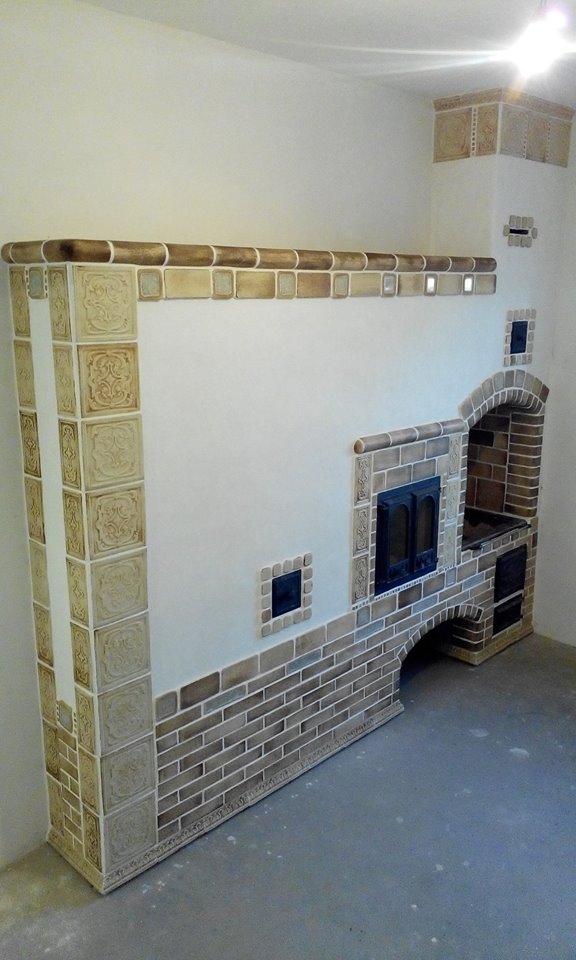
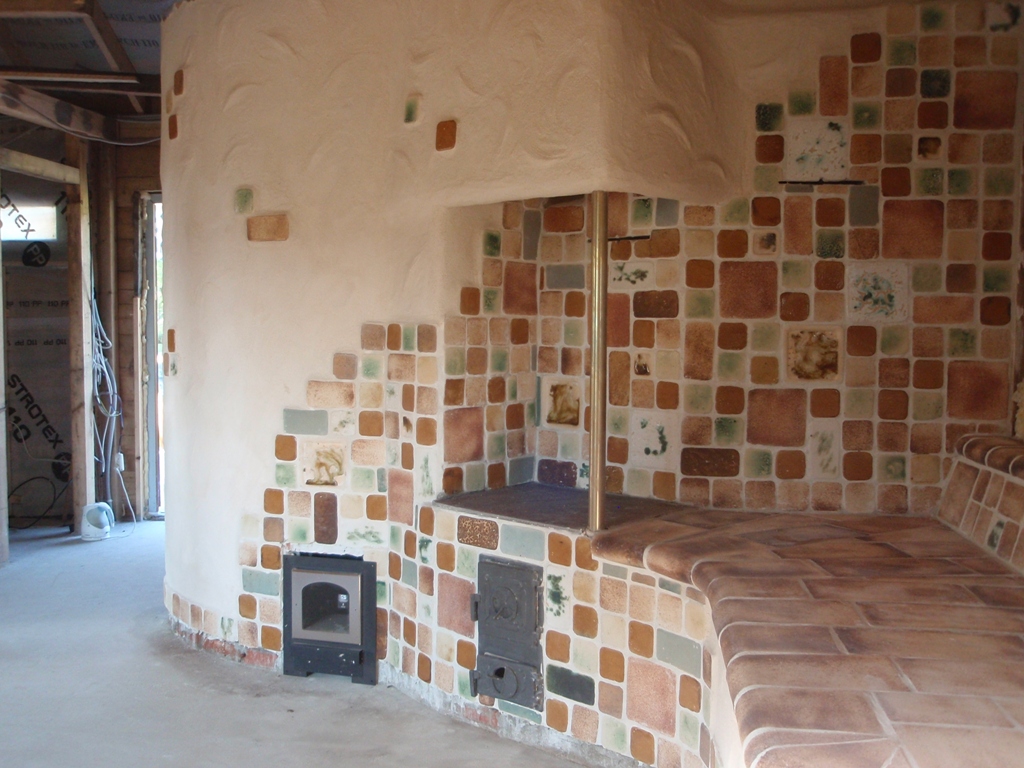
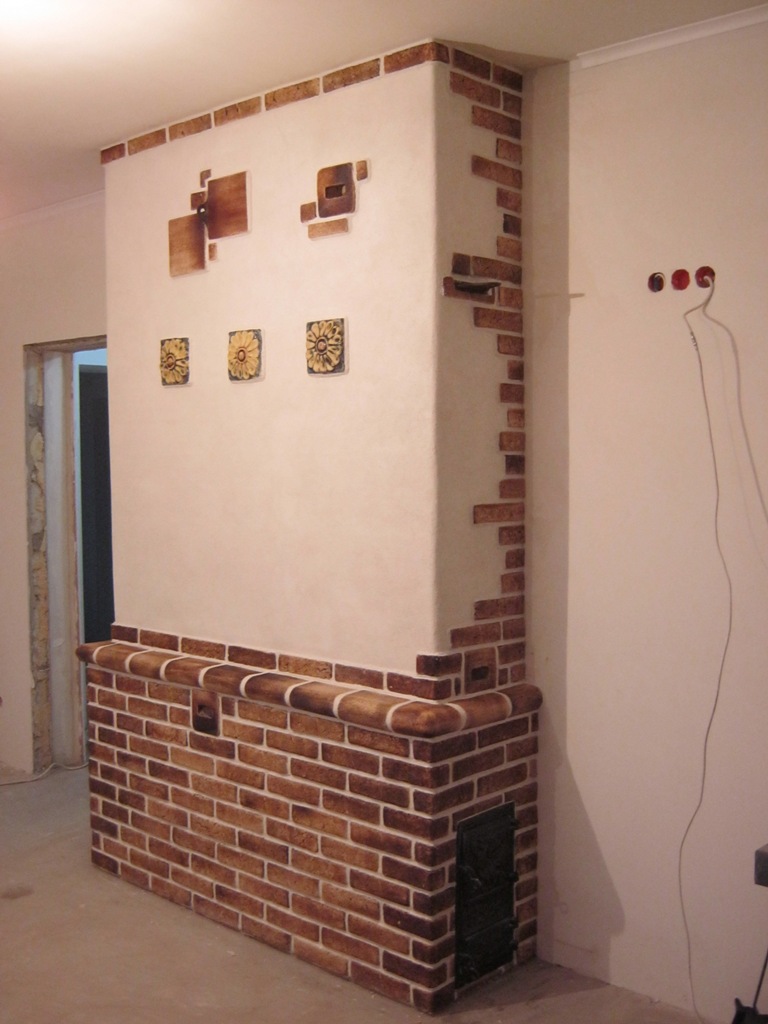
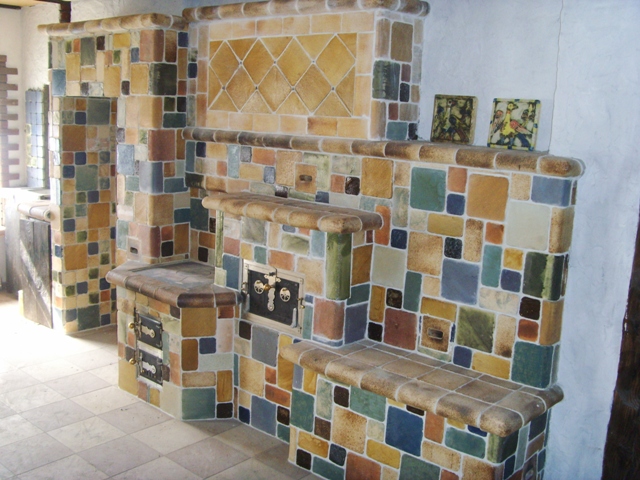
Therefore, the best stove appliances are traditionally considered to be a stove or stove made of fireclay bricks. Such a stove should have a lining with a coefficient of thermal expansion similar to fireclay bricks. And there is nothing better than using a similar material in the decoration of the oven - ceramic fireclay tiles. Fortunately, the wealth of varieties of texture, color and size of fireclay tiles significantly expands the possibilities of stove design. Fireclay tiles for decorating stoves and ovens have almost supplanted tiles, or tiles, for two reasons. First of all, fireclay tiles are much cheaper than tiles (not to be confused with ceramic tiles, they are ordinary ceramic tiles and they are not suitable for decorating stoves and hearths!!). Secondly, the fireclay tile is flat (the tile is voluminous, it has a rump), due to this, the fireclay tile can be cut with a grinder (if you cut the tile, its structure in the form of a "box" will break, and the tile will lose its strength).
In combination with fireclay tiles, decorative stove plaster is very widely used, you can see examples of the use of this combination in this section Gallery.
Як та яким матеріалом обличкувати піч, грубу, трубу димаря - одне з основних питань, що виникають при декоруванні печей. Адже красива піч - це не лише опалювальний прилад, але і прикраса будинку. Оздобити грубу треба технологічно правильно, що б надовго позбавити себе від турбот, "задоволення" щорічно її перероблювати, білити, заробляти тріщини, штукатурити, підмазувати. Від звичайної цегляної стіни або простінка у будинку опалювальні, варильні печі і пічні щитки ( груби ) відрізняються тим що кладка їх розширюється при нагріві, і повертається на колишнє місце при охолодженні. Печі, як говорять, "дихають" і облицювання їм потрібне таке що витримує цикли нагрівання та охолодження. Окрім того матеріал яким оздоблена піч має накопичувати та віддавати тепло в приміщення, а не бути ізолятором тепла, це ж і є основна задача печі - нагрівати приміщення. До речі, саме цим печі та грубки відрізняються від камінів та металевих печей-буржуйок - маса матеріалу в процесі горіння накопичує тепло від вогню та, згодом, рівномірно віддає тепло в приміщення. За рахунок цього тепло від печі завжди м'яке, комфортне, корисне для організму людини. На відміну від печей з цегли металеві печі швидко нагріваються, швидко остигають, дають "різке" тепло та випалюють кисень в приміщенні, якщо на металеву піч осів порох - ви почуєте його неприємний запах коли він горітиме.
Тому найкращими пічними приладами традиційно вважаються піч або грубка складена з шамотної цеглини. Облицювання така піч повинна мати з аналогічним до шамотної цегли коефіцієнтом термічного розширення. І немає нічого кращого ніж застосувати в оздобленні печі аналогічний матеріал - керамічну шамотну плитку. Благо, багатство різновидів фактури, кольору та розмірів шамотної плитки значно розширюють можливості пічного дизайну. Шамотна плитка для оздоблення печей та грубок майже витіснила кахлі, чи кахель, з двох причин. По-перше шамотна плитка значно дешевша ніж кахлі ( не плутати з кафельною плиткою, то звичайна керамічна плитка і вона не годиться для оздоблення печей та груб !! ). По-друге, шамотна плитка пласка ( кахель об'ємний, він має румпу ), за рахунок цього шамотну плитку можна підрізати болгаркою ( якщо розрізати кахель - порушиться його конструкція у вигляді "коробочки", і кахель втратить свою міцність).
У поєднані з шамотною плиткою дуже поширено використовується декоративна пічна штукатурка, приклади застосування такого поєднання можете побачити в цьому розділі Галерея